 Airppb
Airppb
Airppb
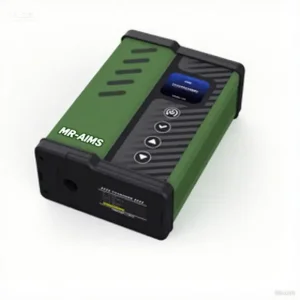
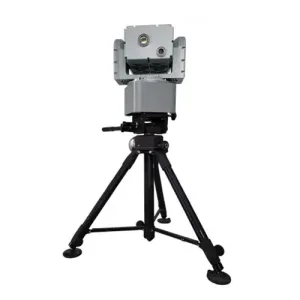
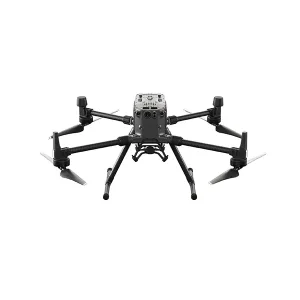
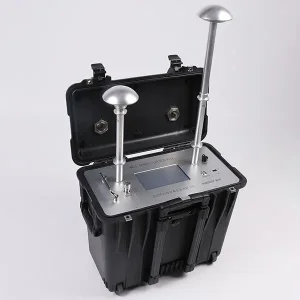
In the high-stakes world of industrial safety and environmental protection, the detection of toxic gases like Phosgene (COCl₂) remains a paramount priority. Traditionally, fixed sensors and handheld devices have been the frontline of defense. However, the emergence of UAV (Unmanned Aerial Vehicle) Phosgene Detectors has revolutionized how we approach chemical leaks and industrial monitoring. As a leading manufacturer and innovator, we explore the global landscape, brand rankings, and the critical importance of selecting the right detection technology.
Detecting phosgene at parts-per-billion (ppb) levels to ensure human safety before symptoms occur.
Mounting precision gas sensors on UAVs allows for 3D spatial mapping of gas plumes without risking personnel.
Instantaneous wireless transmission of toxic gas concentrations to emergency command centers.
The global demand for Emergency UAV Phosgene Detectors is surging, driven by stricter environmental regulations and the expansion of the chemical manufacturing sector in regions like Southeast Asia, the Middle East, and North America. Phosgene is a critical intermediate in the production of plastics, pesticides, and pharmaceuticals, but its extreme toxicity—often lethal at low concentrations—requires a "zero-blind-spot" monitoring strategy.
Currently, the industry is shifting from reactive detection to proactive early warning systems. Top-tier brands are being ranked not just on sensor accuracy, but on their ability to integrate with AI-driven flight controllers and cloud-based big data platforms. Our company, as a pioneer in this space, bridges the gap between sophisticated laboratory analysis and rugged on-site deployment.
Expert Note: Phosgene gas is colorless and has a smell like "new-mown hay" at low levels, which is often not noticed until it reaches dangerous levels. UAV-based detectors eliminate the delay in discovery, identifying leaks at the source in hard-to-reach industrial stacks or remote pipelines.
The future of the UAV Phosgene Detector brand ranking is dictated by several key technological trends:
Procurement officers in the petroleum, petrochemical, and emergency response sectors look for reliability above all. In the Middle East, the focus is on thermal stability and dust-proof designs for volcanic gas monitoring and oil field safety. In Russia and Northern Europe, sensors must operate in extreme sub-zero temperatures.
Local Application Scenarios include:
Gases Detectable
Response Time (T90)
Global Patents
Technical Support
As a leading national high-tech enterprise, Minnit offers distinct advantages in the global market for gas detection instruments. Our manufacturing and R&D facility in China combines high-end innovation with cost-effective production, ensuring that advanced safety technology is accessible worldwide.
We own the core IP for IMS (Ion Mobility Spectrometry), PID, and Fourier Transform Infrared (FTIR) technologies, allowing for deep customization of UAV payloads.
Based in the world's manufacturing hub, we guarantee stable lead times and access to the latest components in AI and robotics.
Our products meet rigorous international standards for safety and explosion-proof certification (Ex), vital for hazardous environment deployment.
Our Mission: Minnit focuses on the research and development and industrialized innovative application of precision gas detection instruments. The company uses technological innovation to realize on-site, automated and intelligent analysis, detection and monitoring, and is committed to becoming the world's leading manufacturer of scientific instruments. We provide global users with comprehensive and professional solutions in the fields of advanced industry, ecological environment emergency safety, and more.
Whether you are looking for the top-ranked Emergency UAV Phosgene Detector or a comprehensive environmental protection telemeter, our technological portfolio is designed to meet the most demanding requirements. By mastering technologies like electrochemistry, PID, and advanced spectroscopy, we provide on-site, automated, and intelligent monitoring that keeps industries safe and communities protected. Trust the expertise of a world-leading scientific instrument manufacturer for your chemical sensing needs.