 Airppb
Airppb
Airppb
In the high-stakes world of the petroleum and petrochemical industry, the detection of toxic gases is not merely a regulatory requirement; it is a critical pillar of operational safety and environmental stewardship. Ion Mobility Spectrometry (IMS) has emerged as a gold-standard technology, offering unparalleled sensitivity and rapid response times for identifying volatile organic compounds (VOCs), toxic industrial chemicals (TICs), and trace gases.
Globally, the IMS market for industrial applications is witnessing a significant paradigm shift. Historically confined to laboratory settings or specialized military use, IMS technology is now being ruggedized for the "front lines" of refineries, offshore platforms, and chemical processing plants. As a leading manufacturer, we are at the forefront of this evolution, ranking among the top providers of high-precision IMS identifiers that bridge the gap between lab-grade accuracy and field-ready durability.
Detection Sensitivity down to parts-per-billion levels.
Rapid response time for immediate hazard warning.
Library of detectable toxic and hazardous gases.
Ruggedized protection for harsh industrial environments.
Ion Mobility Spectrometry works by ionizing sample molecules and measuring the time they take to drift through an electric field against a counter-flow of neutral gas. Because every chemical species has a unique "mobility" based on its size and shape, IMS provides a distinct chemical fingerprint. This allows for the simultaneous detection of multiple toxic gases—such as Hydrogen Sulfide (H2S), Benzene, and Ammonia—even in complex industrial backgrounds where traditional electrochemical sensors might fail or suffer from cross-sensitivity.
Modern petrochemical facilities are moving toward "Smart Refineries". This requires gas detection systems to be fully integrated with Industrial IoT (IIoT) frameworks. Our IMS instruments are now equipped with wireless data transmission, allowing real-time monitoring of toxic gas concentrations from centralized control rooms thousands of miles away.
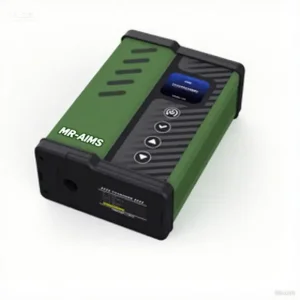
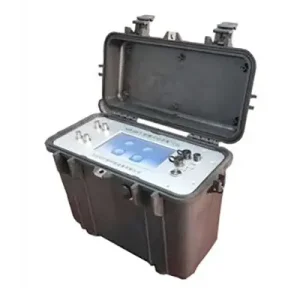
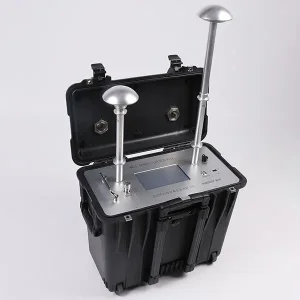
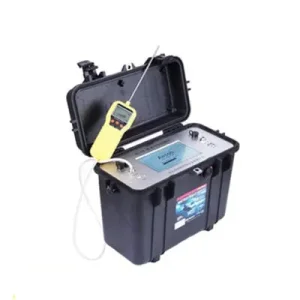
There is a growing demand for handheld and wearable IMS devices. Field technicians need portable identifiers that can confirm the presence of specific chemical leaks without waiting for laboratory results. Our MR-AIMS series represents the pinnacle of this trend, offering laboratory-level performance in a compact, battery-powered form factor.
With global initiatives like the EU Green Deal and China's "Dual Carbon" goals, the monitoring of fugitive emissions has become stricter. IMS technology is uniquely suited for this as it can detect trace leaks that older technologies miss, helping companies avoid heavy fines and reduce their environmental footprint.
Petrochemical environments rarely feature just one gas. The ability to distinguish between different hydrocarbons and toxic additives simultaneously is a major trend. IMS technology excels here, providing a full spectral analysis rather than a simple "pass/fail" sensor reading.
Procurement officers in the energy sector are no longer just looking for "sensors"; they are looking for comprehensive safety solutions. Key selection criteria include Total Cost of Ownership (TCO), ease of calibration, and technical support.
As a national high-tech enterprise, Minnit (Beijing) is redefining the "Made in China" label for scientific instruments. We offer several strategic advantages to our global partners:
Unlike distributors, we own the intellectual property. Whether it's modifying a spectral library for a specific regional gas or integrating custom communication protocols (Modbus, Profibus, LoraWan), our engineers can pivot quickly to meet client needs.
Based in the heart of China's technological hub, we leverage a robust local supply chain for high-quality components, allowing us to offer premium IMS technology at a price point that significantly lowers the barrier to entry for large-scale deployments.
Our instruments undergo rigorous stress testing—from vibration tables to environmental chambers—ensuring they meet international standards for industrial safety. Our ranking as a top manufacturer is built on a foundation of reliability and repeatable accuracy.
Corporate Mission: Minnit is a national high-tech enterprise focusing on the research and development and industrialized innovative application of precision gas detection instruments. The company uses technological innovation to realize on-site, automated and intelligent analysis, detection and monitoring, and is committed to becoming the world's leading manufacturer of scientific instruments. It has mastered relatively complete gas analysis and detection technologies such as electrochemistry, PID, and spectroscopy, and developed laboratory Analysis, on-site analysis (portable, online, mobile), automated analysis and a series of technologically leading product portfolios provide global users with comprehensive and professional solutions in the fields of advanced industry, ecological environment emergency safety and other fields.
The future of Toxic Gas Ion Mobility Spectrometry lies in artificial intelligence. By applying machine learning algorithms to IMS drift spectra, we can now achieve even higher resolution in gas identification, effectively "learning" to filter out background noise in real-time. This reduces false alarms—a major pain point for refinery operators—and increases the reliability of automated safety shutdown systems.
As we continue to expand our global footprint, our commitment remains the same: to provide the petroleum and petrochemical industry with the most advanced, reliable, and authoritative gas detection tools available. Whether you are searching for a high-ranking manufacturer or a long-term R&D partner, our IMS solutions represent the pinnacle of modern safety technology.