 Airppb
Airppb
Airppb
In the modern maritime era, the safety of vessels and the protection of the marine environment have become paramount. The Ship Gas Telemeter is no longer just a luxury; it is a critical industrial necessity. Globally, the maritime industry is shifting toward "Green Shipping," driven by strict regulations from the International Maritime Organization (IMO), such as MARPOL Annex VI. These regulations mandate the monitoring of sulfur oxides (SOx), nitrogen oxides (NOx), and carbon dioxide (CO2) emissions from ships.
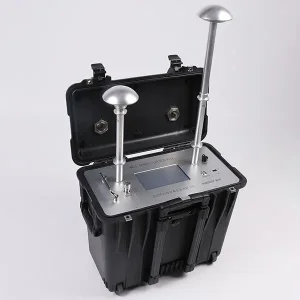
A Ship Gas Telemeter utilizes advanced remote sensing technologies, including Fourier Transform Infrared (FTIR) and Ion Mobility Spectrometry (IMS), to detect hazardous gas leaks and monitor exhaust plumes from a distance. This capability is vital for LNG carriers, chemical tankers, and large container ships where on-site manual inspection is often dangerous or impossible. The global market for these instruments is expanding rapidly, with a projected CAGR of over 6.5% as shipowners prioritize automated safety systems.
The gas detection industry is undergoing a digital revolution. We are seeing a move away from simple "alarm-only" devices toward integrated Intelligent Monitoring Ecosystems. Modern Ship Gas Telemeters now feature AI-enhanced algorithms that can distinguish between background atmospheric gases and actual hazardous leaks, significantly reducing false alarms.
Cloud-Based Telemetry: Data is no longer confined to the ship's bridge. Real-time gas concentration levels are transmitted via satellite to onshore command centers, allowing fleet managers to monitor environmental compliance globally.
Multi-Spectral Imaging: Combining infrared gas detection with visual imaging allows operators to "see" gas clouds, identifying the exact source and trajectory of a leak in real-time.
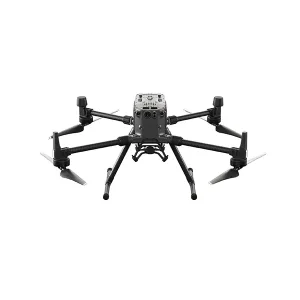
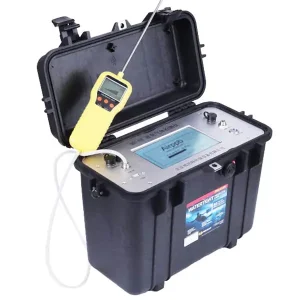
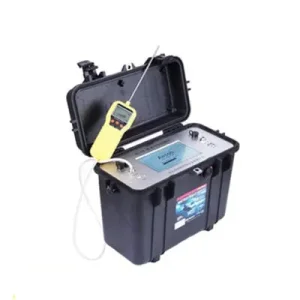
Miniaturization: Handheld and drone-mounted gas telemeters are becoming standard for rapid response teams, providing flexibility in emergency scenarios at sea or in port.
The Middle East, particularly the Persian Gulf and the Red Sea, represents one of the most demanding environments for maritime technology. As a global hub for oil and gas exports, the region sees a high density of VLCCs (Very Large Crude Carriers) and LNG tankers. Here, Ship Gas Telemeters must withstand extreme temperatures, high humidity, and saline corrosion.
In ports like Jebel Ali (UAE), Ras Tanura (Saudi Arabia), and Hamad Port (Qatar), gas telemetry systems are used for:
Our ranking as a top manufacturer in the Middle East is built on our ability to provide ruggedized, high-precision instruments that perform reliably in 50°C+ desert heat and coastal salt-spray conditions.
International procurement officers for shipping lines and environmental agencies look for three core pillars when selecting a gas telemeter manufacturer: Accuracy, Reliability, and Support. A failure in gas detection can lead to catastrophic explosions, multi-million dollar fines for environmental violations, or loss of life.
Global buyers are increasingly demanding "Smart" features, such as self-calibration, modular sensor replacement, and compatibility with existing ship management software (SMS). As a leading manufacturer, we ensure our products meet CE, ATEX, and IECEx certifications, providing the "Trustworthiness" required by the E-E-A-T principle.
As a premier Chinese high-tech enterprise, Minnit offers a unique value proposition to the global market. Our strength lies in the integration of a complete supply chain with world-class R&D. China has become a global leader in spectroscopic analysis and electrochemical sensor manufacturing, allowing us to offer cutting-edge technology at a competitive price point.
Minnit is a national high-tech enterprise focusing on the research and development and industrialized innovative application of precision gas detection instruments. The company uses technological innovation to realize on-site, automated and intelligent analysis, detection and monitoring, and is committed to becoming the world's leading manufacturer of scientific instruments.
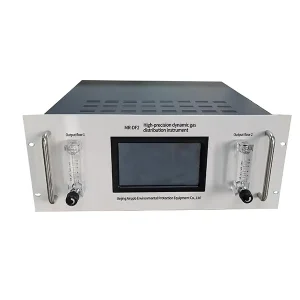
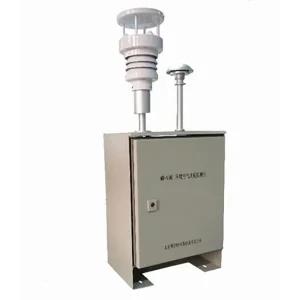
We have mastered relatively complete gas analysis and detection technologies such as electrochemistry, PID, and spectroscopy. Our portfolio includes laboratory analysis, on-site analysis (portable, online, mobile), and automated analysis systems. These technologically leading products provide global users with comprehensive and professional solutions in the fields of advanced industry, ecological environment, and emergency safety.