 Airppb
Airppb
Airppb
In an era where chemical threats, both intentional and accidental, pose significant risks to national security and public safety, the Military Poison Ion Mobility Spectrometer (IMS) Detector stands as the first line of defense. These sophisticated instruments are designed to detect and identify Chemical Warfare Agents (CWAs), Toxic Industrial Chemicals (TICs), and narcotics in seconds, providing critical early warning for military personnel and emergency responders worldwide.
The global market for military-grade poison detectors is currently undergoing a period of rapid expansion. Originally developed for battlefield use, Ion Mobility Spectrometry (IMS) has become the gold standard for rapid chemical detection. Today, the industrial landscape is dominated by high-precision requirements from defense departments, border security agencies, and specialized HAZMAT teams.
The total addressable market for IMS-based detection systems is projected to exceed billions of dollars by 2030, driven by increased defense spending in the Middle East, Eastern Europe, and the Asia-Pacific region.
IMS technology is no longer a standalone tool. It is being integrated with PID (Photoionization Detection) and Electrochemical sensors to create multi-modal "orthogonal" detection platforms that virtually eliminate false positives.
Commercial airports, subways, and government buildings are now permanent installers of fixed IMS monitoring systems, mirroring the tech used by elite military units.
When ranking Poison Ion Mobility Spectrometer Detectors, several key performance indicators (KPIs) are evaluated by global procurement officers. These include Sensitivity (Limit of Detection), Library Breadth (range of chemicals identified), Response Time, and Durability in extreme environments.
The future of chemical detection is being shaped by Artificial Intelligence (AI) and the Internet of Things (IoT). We are moving away from passive detection to proactive, networked intelligence.
Modern IMS detectors utilize machine learning to analyze ion mobility patterns. This allows the device to distinguish between a deadly chemical agent and common battlefield "interference" like diesel fumes or burning rubber.
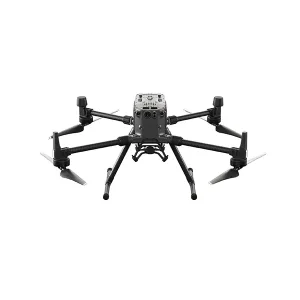
Drones and UGVs (Unmanned Ground Vehicles) are now being equipped with miniaturized IMS modules to survey "hot zones" before human troops enter, significantly reducing risk to life.
When a detector in the field identifies a toxin, it can instantly transmit the data to a centralized command center, creating a real-time digital map of the chemical plume's movement.
Procurement requirements vary wildly depending on the region and the specific threat profile. Understanding these nuances is where Minnit excels as a professional manufacturer.
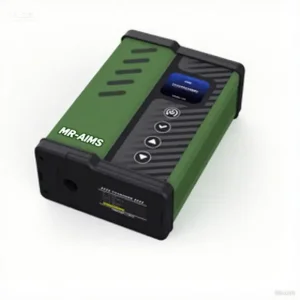
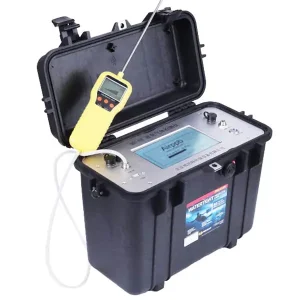
Demand for handheld units like the MR-AIMS is high. These must be operable by soldiers wearing MOPP (Mission Oriented Protective Posture) gear, meaning they need large buttons and high-contrast screens.
The focus here shifts toward narcotics and precursor detection. Customs officers require a broad library that can identify fentanyl analogues and high-grade explosives concealed in cargo.
In chemical parks, fixed-position IMS systems are required to monitor for leaks of Ammonia, Chlorine, and Phosgene. These systems must be rugged enough to withstand corrosive industrial atmospheres.
As a leading Chinese national high-tech enterprise, Minnit offers a unique value proposition to the global market. Our approach combines rigorous R&D with the industrial efficiency of China's world-class supply chain.
Minnit is a national high-tech enterprise focusing on the research and development and industrialized innovative application of precision gas detection instruments. The company uses technological innovation to realize on-site, automated and intelligent analysis, detection and monitoring, and is committed to becoming the world's leading manufacturer of scientific instruments.
It has mastered relatively complete gas analysis and detection technologies such as electrochemistry, PID, and spectroscopy, and developed laboratory Analysis, on-site analysis (portable, online, mobile), automated analysis and a series of technologically leading product portfolios provide global users with comprehensive and professional solutions in the fields of advanced industry, ecological environment emergency safety and other fields.