 Airppb
Airppb
Airppb
Minnit is a national high-tech enterprise focusing on the research and development and industrialized innovative application of precision gas detection instruments. The company uses technological innovation to realize on-site, automated and intelligent analysis, detection and monitoring, and is committed to becoming the world's leading manufacturer of scientific instruments. It has mastered relatively complete gas analysis and detection technologies such as electrochemistry, PID, and spectroscopy, and developed laboratory analysis, on-site analysis (portable, online, mobile), automated analysis and a series of technologically leading product portfolios provide global users with comprehensive and professional solutions in the fields of advanced industry, ecological environment emergency safety and other fields.
In the modern era of defense and high-stakes industrial operations, the demand for Military Large-Range Rapid Scanning solutions has never been more critical. As threats evolve from traditional combat to chemical, biological, and environmental hazards, the ability to detect, identify, and quantify gases at a distance (stand-off detection) is the cornerstone of modern security protocols.
Nations are shifting from point-source detectors to large-range scanning arrays. This allows for early warning without exposing personnel to toxic environments.
Oil, gas, and petrochemical giants (like those in the Middle East and Russia) utilize rapid scanning to monitor massive refinery complexes for leaks in real-time.
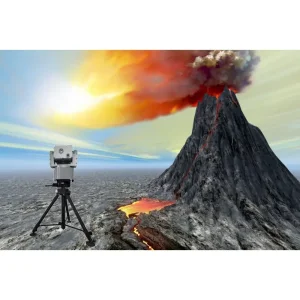
Global environmental agencies are adopting Fourier Transform Infrared (FTIR) telemetering to monitor city-wide air quality and volcanic activities.
The global market for military-grade scanning is currently dominated by a few elite manufacturers capable of integrating hyperspectral imaging with rapid processing. The "Large-Range" aspect refers to distances typically exceeding 5km, where atmospheric interference becomes a significant technical hurdle. Manufacturers are now utilizing AI-driven algorithms to filter out noise (water vapor, CO2) to focus on the unique spectral "fingerprints" of hazardous chemicals.
The next generation of rapid scanning isn't just about seeing; it's about knowing. AI models are being trained on millions of gas spectra to provide instantaneous identification of multi-gas mixtures (VOCs, CWA, TIC) without human intervention.
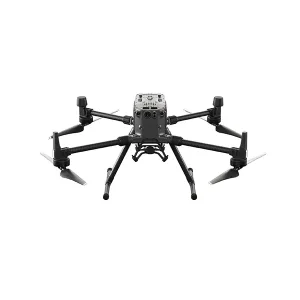
Portability is key. Miniaturizing large-range scanners for UAV deployment allows for "aerial patrolling" of borders and industrial zones, providing a 360-degree safety net that fixed stations cannot match.
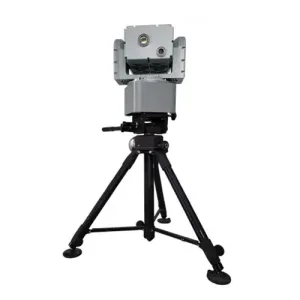
Moving from numerical data to visual heatmaps. Modern systems like the MR-ACT Gas Telemetry Imaging allow commanders to literally "see" the gas cloud, its concentration, and its trajectory on a screen overlaid with real-world video.
Detection Range
Response Time
Gases Identified
Autonomous Operation
Global procurement for military scanning systems is increasingly focused on interoperability and durability. From the scorching deserts of the Middle East to the freezing tundras of Russia, these systems must remain calibrated and functional. Key procurement drivers include:
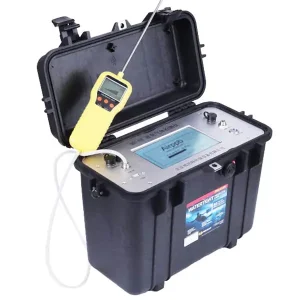
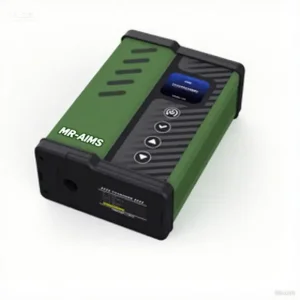
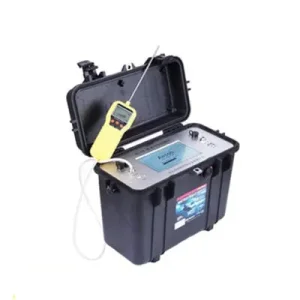
Imagine a chemical plant leak in a densely populated urban area. A handheld IMS chemical identifier (MR-AIMS) is used by the first responders, while a vehicle-mounted MR-FAT FTIR telemeter scans the entire 5km radius to determine the evacuation zone. This multi-layered approach is why Minnit is ranked as a top-tier provider.
As a leading Chinese manufacturer, Minnit offers a unique synergy of high-tech R&D and cost-effective production capacity. Our advantages include:
We own the full intellectual property rights for our spectroscopy and electrochemical sensing modules. Unlike "integrators," we are a True Manufacturer, allowing us to customize sensor sensitivity for specific regional gases.
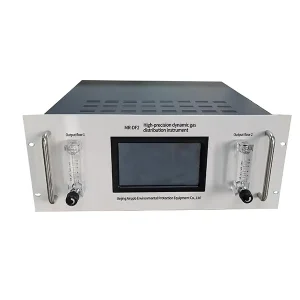
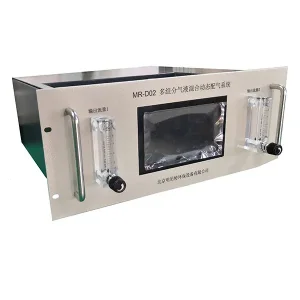
Located in China's high-tech industrial hub, we leverage a world-class supply chain. This means we can iterate on new models, like the MR-DO2 multi-component gas-liquid mixing instrument, faster than Western counterparts.
Every "Military MR-AX" or "MR-ACT" system undergoes stress testing for vibration, thermal shock, and EMI/EMC interference. We ensure our equipment exceeds international standards for reliability in the field.
In the ranking of Military Large-Range Rapid Scanning Manufacturers, Minnit stands out not just for the distance our sensors can cover, but for the clarity of the intelligence they provide. By merging FTIR, IMS, and AI technologies, we provide a holistic shield for both soldiers on the front lines and workers in industrial zones. Our commitment to innovation ensures that as global threats evolve, Minnit’s detection capabilities will always stay one step ahead.