 Airppb
Airppb
Airppb
The transition from traditional electrochemical sensors to Infrared Gas Telemetry Imaging is revolutionizing industrial safety. As global standards for emission control (such as ESG and EPA regulations) tighten, the need for long-distance, non-contact visualization of invisible gas clouds has surged.
Major petrochemical hubs in the Middle East, Russia, and North America are actively replacing aging "point detection" grids with Standoff Early Warning Systems. The demand centers around 24/7 autonomous monitoring of VOCs, Methane, and toxic leaks in hazardous zones.
Modern systems now integrate AI-driven recognition. These systems can distinguish between steam and hazardous gas, estimate leak concentration, and trace the path of gas clouds across square kilometers in real-time, providing critical lead time for emergency responders.
The future lies in the fusion of LWIR (Long-Wave Infrared) and MWIR (Mid-Wave Infrared) technologies. This allows for a "Multi-Gas Portfolio" where a single imaging system can detect everything from Sulfur Hexafluoride (SF6) in power grids to Ammonia in agricultural facilities.
Telemetry imaging is no longer a standalone tool. It is becoming a node in the wider Industrial Internet of Things (IIoT). Data collected at the edge is uploaded to cloud platforms for big data analysis, enabling predictive maintenance and regional safety mapping.
Current R&D focuses on extending the effective imaging distance. Early warning systems can now accurately visualize gas plumes from over 5 kilometers away, keeping human personnel far outside the "blast zone" during a catastrophic failure.
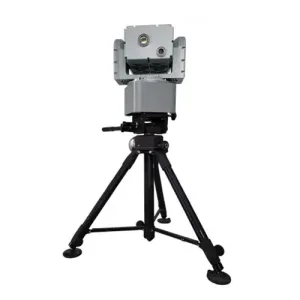
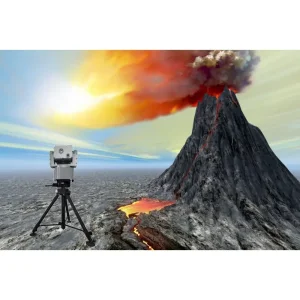
In regions like the Middle East and active volcanic zones, the MR-ACT Remote Volcanic Gas Monitoring System is deployed to detect SO2 and CO2 shifts. These gaseous changes often precede seismic events, providing a critical early warning for local populations.
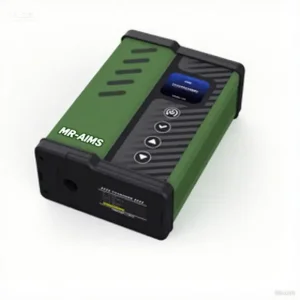
For city fire departments, the MR-AIMS Handheld IMS Identifier is indispensable. During chemical spills or warehouse fires, it identifies toxic substances instantly, allowing firefighters to choose the correct protective gear and suppression agents.
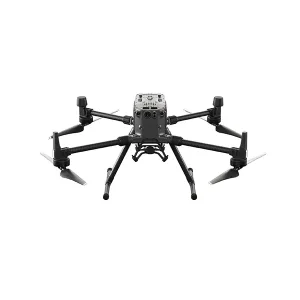
In Russia and Central Asia, telemetry imaging is used for cross-country pipeline inspections. Mounted on mobile units or drones, the systems detect methane leaks across vast, uninhabited stretches of land where point sensors are impractical.
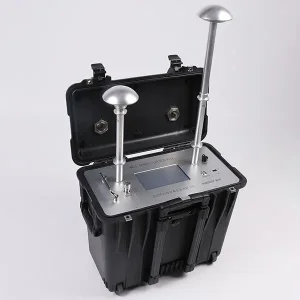
Landfills and chemical parks utilize the MR-AX Odor Gas Detector to track the migration of malodorous gases that affect local communities, ensuring regulatory compliance and maintaining public relations.
Minnit is a national high-tech enterprise focusing on the research and development and industrialized innovative application of precision gas detection instruments. As a premier Chinese manufacturer, we combine the efficiency of advanced manufacturing with world-class scientific innovation.
Our core strength lies in mastering the complete spectrum of gas analysis technologies: Electrochemistry, PID (Photoionization), and Spectroscopy (Infrared/IMS). Unlike many distributors, we are a true manufacturer, allowing us to provide:
As leaders in the field, we believe that Emergency Infrared Gas Telemetry is defined by its ability to provide actionable data in seconds. A true high-ranking system must possess:
"The difference between a standard camera and a gas telemetry imaging system is the spectral resolution. Our Fourier Transform Infrared (FTIR) telemeter, the MR-FAT, doesn't just 'see' a cloud; it identifies the molecular fingerprint of the gas, providing concentration data that saves lives."
— Senior R&D Engineer, Minnit Instruments
When procuring for hazardous industries, one must consider the NETD (Noise Equivalent Temperature Difference) and the Spectral Range. Our series provides the sensitivity required to detect even the smallest leaks before they reach the LEL (Lower Explosive Limit).