 Airppb
Airppb
Airppb
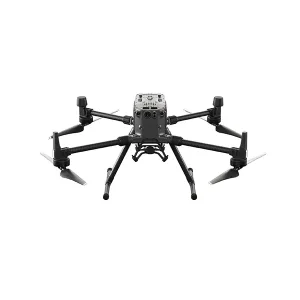
In an era of increasing geopolitical uncertainty and complex industrial threats, the demand for Emergency Drone Biological and Chemical Weapons Detectors has transitioned from a niche military requirement to a critical global security necessity. Conventional ground-based detection systems often face limitations in speed, range, and personnel safety. Drones (UAVs) equipped with CBRNE (Chemical, Biological, Radiological, Nuclear, and Explosive) sensors are revolutionizing the way first responders and defense forces mitigate risks.
Today, the global market for aerial hazardous material detection is expanding rapidly across North America, Europe, the Middle East, and Asia-Pacific. Governments are prioritizing "Standoff Detection"—the ability to identify threats from a safe distance. Our role as a premier manufacturer and brand is to provide the hardware and software "eyes" for these drone platforms, ensuring that invisible threats like nerve agents, toxic industrial chemicals (TICs), and biological pathogens are detected before they reach populated areas.
Modern detectors no longer just "signal" a presence; they use AI algorithms to cross-reference spectral libraries (FTIR/IMS) to identify specific chemical structures or biological strains in real-time, reducing false alarms significantly.
The trend is moving toward payloads that weigh less than 1kg but offer the same sensitivity as laboratory-grade equipment. This allows smaller, more agile drones to be deployed in confined urban spaces.
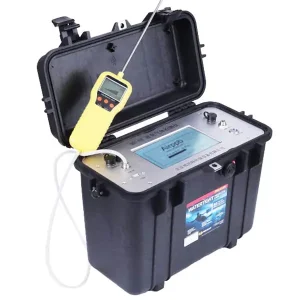
Combining PID (Photoionization), Electrochemistry, and Infrared Spectroscopy into a single drone payload ensures comprehensive coverage of VOCs, toxic gases, and aerosolized agents.
From the oil fields of the Middle East to the industrial parks of Eastern Europe, procurement officers are looking for reliable, field-tested solutions. Key requirements include:
Localization is key. Our systems support multiple languages and integrate with local GIS (Geographic Information Systems) to provide real-time heat maps of gas plumes, aiding in precise evacuation planning.
Minnit is a national high-tech enterprise focusing on the research and development and industrialized innovative application of precision gas detection instruments. The company uses technological innovation to realize on-site, automated and intelligent analysis, detection and monitoring, and is committed to becoming the world's leading manufacturer of scientific instruments. It has mastered relatively complete gas analysis and detection technologies such as electrochemistry, PID, and spectroscopy, and developed laboratory Analysis, on-site analysis (portable, online, mobile), automated analysis and a series of technologically leading product portfolios provide global users with comprehensive and professional solutions in the fields of advanced industry, ecological environment emergency safety and other fields.
We hold proprietary patents in Fourier Transform Infrared (FTIR) and Ion Mobility Spectrometry (IMS), ensuring our drone payloads are at the pinnacle of scientific capability.
Being based in China's high-tech manufacturing hub, we offer rapid prototyping and mass production capabilities that significantly reduce lead times for urgent emergency orders.
We deliver "Laboratory-on-a-Drone" capabilities at a fraction of the cost of traditional Western defense contractors, without compromising on E-E-A-T principles of reliability and precision.
Our drone-mounted systems are designed for extreme environments. Whether it's the high-heat conditions of a volcanic eruption monitoring mission in the Middle East or the freezing temperatures of a chemical plant inspection in Russia, our hardware is ruggedized (IP67) and thermally stabilized.
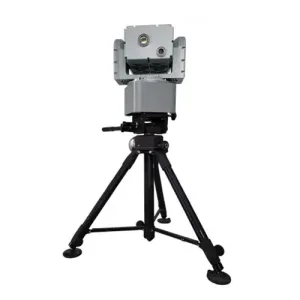
1. Spectroscopy: Utilizing FTIR for remote sensing, allowing the drone to identify gas clouds from several kilometers away.
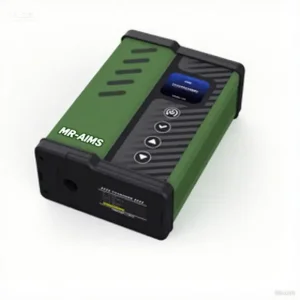
2. Ion Mobility Spectrometry (IMS): The gold standard for detecting chemical warfare agents and explosives at trace levels (parts per billion).
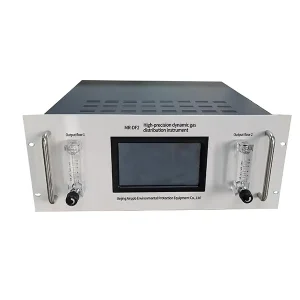
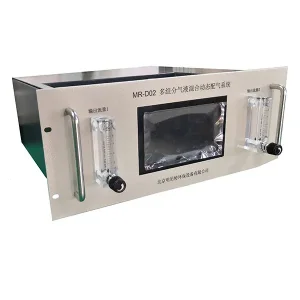
3. Dynamic Gas Distribution: We also manufacture high-precision gas distribution instruments to calibrate sensors in the field, ensuring ongoing accuracy (Authoritativeness).