 Airppb
Airppb
Airppb
Conductive Anodic Filament (CAF) is a significant failure mechanism in Printed Circuit Boards (PCBs), especially in high-density military and aerospace applications. It involves the electrochemical migration of copper along the glass fiber reinforcement within the PCB substrate, leading to internal short circuits. As a leading Military CAF Ion Migration Manufacturer, we specialize in detecting and preventing these catastrophic failures before they occur in the field.
Under high humidity and voltage bias, copper ions move from the anode to the cathode. In military environments—where equipment is subjected to extreme temperature swings and moisture—this process accelerates. Our research and ranking in the industry stem from our ability to simulate these harsh conditions using precision instruments, ensuring that mission-critical electronics maintain 100% uptime.
The global demand for high-reliability PCBs is surging, driven by the electrification of defense systems and the rise of 5G/6G communication infrastructure. North America and Europe remain the primary hubs for aerospace innovation, but the Asia-Pacific region, particularly China, has emerged as the manufacturing powerhouse. As a top-ranked Military CAF Ion Migration Manufacturer, we serve a global clientele that requires rigorous testing standards, including IPC-TM-650 and MIL-STD-883.
Current trends highlight a shift towards In-Situ Monitoring. Traditional testing methods involve post-exposure analysis, which is time-consuming. Modern industry demands real-time data on ion migration resistance during the manufacturing process. Our company is at the forefront of integrating AI-driven analysis with ion chromatography and high-precision gas detection to provide a holistic view of board-level reliability.
The application of Military CAF Ion Migration testing isn't limited to just one sector. Its versatility makes it essential for any environment where failure is not an option.
In the vacuum of space or the high-ozone layers of the atmosphere, materials behave differently. Ion migration can be triggered by cosmic radiation or subtle condensation in cabin electronics. Our testing equipment provides the baseline for choosing the right resins and glass-weave materials for satellite PCBs.
Handheld IMS identifiers and multi-gas detectors used by soldiers often operate in tropical humid jungles. The PCB assemblies within these devices must resist CAF to ensure the internal gas sensors provide accurate readings without interference from electrical leakage.
Salt-laden air is highly conductive. Naval electronic systems are prone to rapid ion migration. Our high-ranking solutions involve specialized coatings and material analysis that prevent copper filament growth even in the presence of chloride ions.
As a national high-tech enterprise based in China, we offer a unique blend of technological innovation and manufacturing efficiency that Western counterparts often struggle to match.
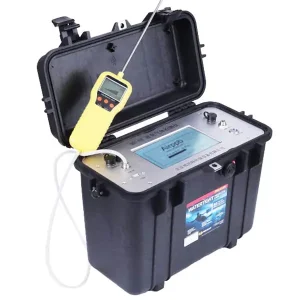
Minnit is a national high-tech enterprise focusing on the research and development and industrialized innovative application of precision gas detection instruments. The company uses technological innovation to realize on-site, automated and intelligent analysis, detection and monitoring, and is committed to becoming the world's leading manufacturer of scientific instruments.
It has mastered relatively complete gas analysis and detection technologies such as electrochemistry, PID, and spectroscopy, and developed laboratory Analysis, on-site analysis (portable, online, mobile), automated analysis and a series of technologically leading product portfolios provide global users with comprehensive and professional solutions in the fields of advanced industry, ecological environment emergency safety and other fields.
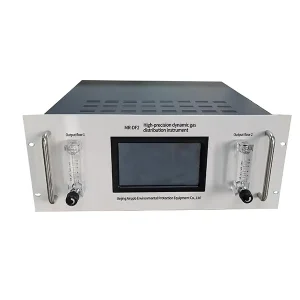
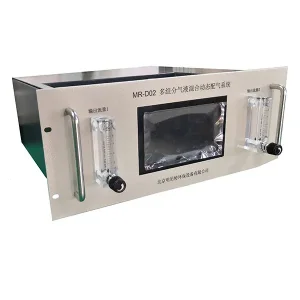
Our ranking as a top manufacturer is built on our deep understanding of the anodic reaction where copper dissolves into Cu2+ ions. These ions then migrate across the dielectric bridge. By utilizing advanced gas distribution systems like the MR-DF3, we can simulate corrosive atmospheres (SO2, H2S) to see how they interact with PCB ion migration, providing a more comprehensive reliability test than standard humidity chambers.
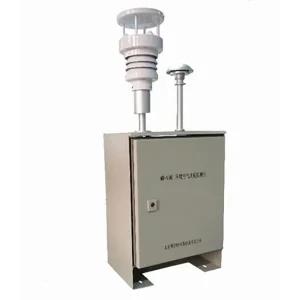
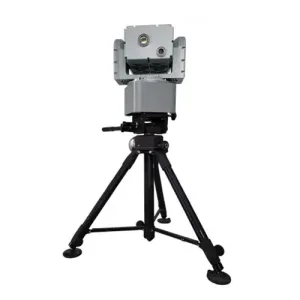
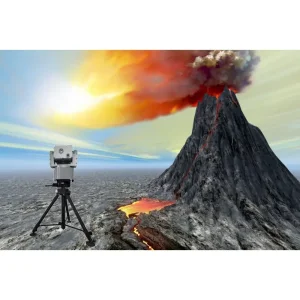
We believe the future of "Military CAF Ion Migration" is digital. Our instruments are now being equipped with IoT modules that allow remote telemetry of gas and environmental factors that lead to ion migration. This is particularly vital for systems like the MR-ACT Gas Telemetry Imaging, where hardware must survive in harsh volcanic or industrial zones for decades.
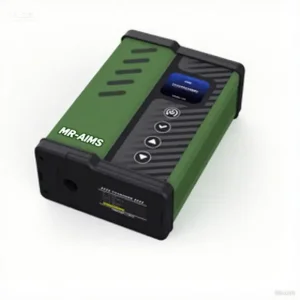
As the "Military CAF Ion Migration Manufacturer & Ranking" leader, our mission is to push the boundaries of what is possible in precision detection. Whether it is preventing a short circuit in a fighter jet's avionics or detecting trace chemical warfare agents with our MR-AIMS Handheld IMS, the common thread is reliability. We continue to invest in E-E-A-T principles, ensuring our expertise and authoritative position in the market translates to better safety and performance for our end-users worldwide.
Global procurement teams looking for high-precision gas distribution meters, IMS identifiers, or environmental monitors can trust our Chinese factory's rigorous quality control and innovative R&D. We are not just making instruments; we are securing the future of high-tech industries.