 Airppb
Airppb
Airppb
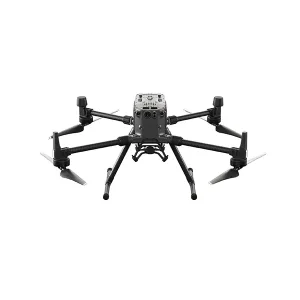
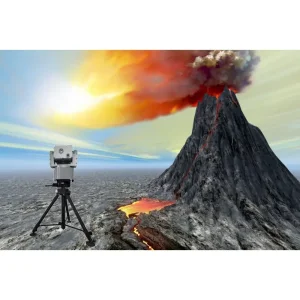
The global landscape for Military Atmospheric Detection Drones has shifted from simple reconnaissance to complex, multi-layered CBRN (Chemical, Biological, Radiological, and Nuclear) defense ecosystems. Today, the integration of high-precision gas sensors onto Unmanned Aerial Vehicles (UAVs) is no longer a luxury but a tactical necessity. In the industrial sector, these drones are revolutionizing how we monitor large-scale petrochemical facilities, identify volcanic emissions, and respond to environmental emergencies.
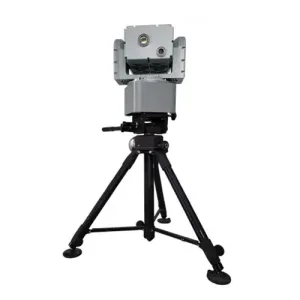
Current market data suggests a compound annual growth rate (CAGR) of over 12% in the specialized drone sensor market. Governments across North America, Europe, and Asia are aggressively procuring systems that offer "stand-off" detection capabilities—allowing personnel to identify hazardous substances from kilometers away without entering the "hot zone." This trend is driven by the need for rapid data visualization and real-time decision-making in high-stakes environments.
Modern military drones now utilize swarm technology to map gas plumes in 3D, providing a comprehensive view of atmospheric hazards across vast battlefields or industrial sites.
Integration of FTIR (Fourier Transform Infrared) and IMS (Ion Mobility Spectrometry) allows for the identification of complex chemical agents at parts-per-billion (ppb) levels.
On-board data processing ensures that critical alerts are generated instantly, bypassing the latency of cloud-based analysis during time-sensitive military operations.
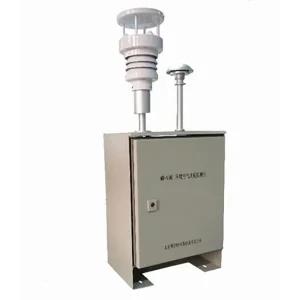
The demand for Atmospheric Detection Drone Brands varies significantly by region. In the Middle East, the focus is often on volcanic monitoring and oil field safety, where extreme temperatures require ruggedized hardware. In Eastern Europe and Russia, the emphasis lies on early warning systems for chemical leaks and tactical gas telemetry. Meanwhile, in highly industrialized zones of Asia, the priority is "Micro Air Stations" that can be deployed rapidly to monitor urban air quality or industrial park emissions.
Global procurement officers look for three key pillars: Interoperability (can the drone talk to existing command systems?), Durability (can it withstand harsh environments?), and Accuracy (can it distinguish between a false alarm and a lethal threat?). Our solutions are designed to meet these rigorous international standards, providing localized software interfaces and sensor calibrations tailored to specific geographic challenges.
As a national high-tech enterprise, we leverage China's world-class electronics and aerospace supply chain to deliver cutting-edge instruments at a fraction of the traditional lead time.
We have mastered the complete spectrum of gas analysis technologies—Electrochemistry, PID, and Spectroscopy—allowing us to customize sensors for any specific military or industrial requirement.
Our industrialized innovative application model ensures that high-end scientific instruments are accessible for large-scale deployment, from portable units to automated mobile stations.
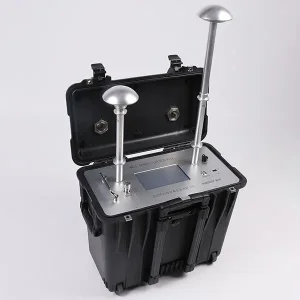
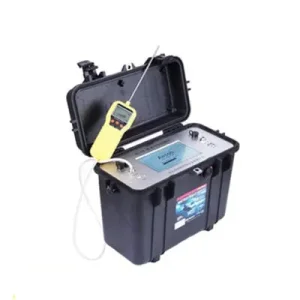
Minnit is a national high-tech enterprise focusing on the research and development and industrialized innovative application of precision gas detection instruments. The company uses technological innovation to realize on-site, automated and intelligent analysis, detection and monitoring, and is committed to becoming the world's leading manufacturer of scientific instruments. It has mastered relatively complete gas analysis and detection technologies such as electrochemistry, PID, and spectroscopy, and developed laboratory Analysis, on-site analysis (portable, online, mobile), automated analysis and a series of technologically leading product portfolios provide global users with comprehensive and professional solutions in the fields of advanced industry, ecological environment emergency safety and other fields.
In the context of modern defense, "Atmospheric Intelligence" refers to the granular understanding of the air composition in a given tactical area. Military Atmospheric Detection Drones serve as the eyes and nose of the commander, providing data that can prevent mass casualties from chemical warfare or industrial accidents. The ranking of these brands is typically determined by their sensor sensitivity, the robustness of their data encryption, and their ability to operate in GPS-denied environments.
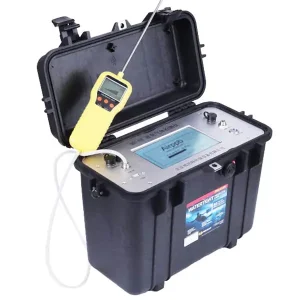
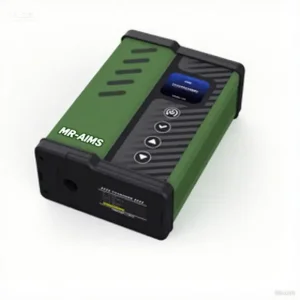
As we look toward 2030, the industry is moving toward "Zero-Trust" detection architectures, where multiple drones cross-verify readings to eliminate false positives. Our commitment to R&D ensures that Minnit remains at the forefront of this evolution, providing global partners with the reliability and expertise needed to safeguard lives and environments. Whether it is a handheld IMS identifier for a first responder or a drone-mounted FTIR system for a military unit, our technology is built to perform when it matters most.