 Airppb
Airppb
Airppb
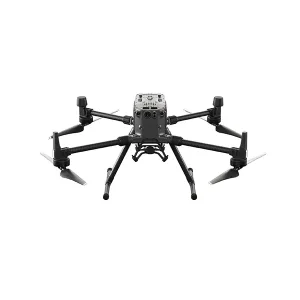
In the current global industrial landscape, the transition from fixed-point gas sensors to Mobile Drone Gas Cloud Imaging represents a paradigm shift in safety and environmental monitoring. Traditional methods often miss leaks in hard-to-reach areas or put human inspectors at risk. Today, industries ranging from oil and gas to chemical manufacturing are adopting Unmanned Aerial Vehicles (UAVs) equipped with sophisticated infrared and spectral imaging sensors to visualize invisible gas clouds in real-time.
Annual Market Growth
Autonomous Monitoring
Detection Range
Sensitivity Level
The global market for drone-based gas detection is surging, driven by stringent environmental regulations and the urgent need for Methane Leak Detection and Repair (LDAR). Companies are no longer satisfied with simple alarms; they require visual evidence—a "gas cloud image"—that shows the source, concentration, and dispersion path of hazardous emissions. This technology is becoming standard for pipeline inspections, offshore platform monitoring, and emergency response in industrial parks.
Modern drone systems are now integrated with AI algorithms that can automatically identify gas species based on their unique spectral signatures. This reduces the need for manual data analysis and allows for instantaneous alerting.
The trend is moving toward combining Thermal Imaging, LiDAR, and Fourier Transform Infrared (FTIR) telemetry on a single drone platform. This provides a comprehensive 3D map of the environment alongside gas concentration data.
Global enterprises are demanding centralized platforms where drone flight data and gas imaging results are uploaded in real-time to the cloud, allowing stakeholders anywhere in the world to monitor site safety.
With the development of hydrogen fuel cells and high-density batteries, drones can now cover hundreds of kilometers of pipelines in a single mission, significantly lowering the cost per kilometer of inspection.
The Middle East, as the world's energy hub, presents unique challenges and opportunities for Drone Gas Cloud Imaging. Our systems are specifically engineered to thrive in these demanding environments:
In regions like Saudi Arabia, the UAE, and Qatar, ambient temperatures can exceed 50°C. Our drone payloads utilize advanced cooling systems and industrial-grade components to ensure stable imaging performance without thermal drift, which is critical for accurate gas quantification in the desert heat.
From the massive refineries in Jubail to the offshore rigs in the Persian Gulf, our MR-ACT and MR-FAT series provide non-contact, long-distance monitoring. This is essential for detecting H2S (Hydrogen Sulfide) leaks, which are highly toxic and common in Middle Eastern sour gas fields.
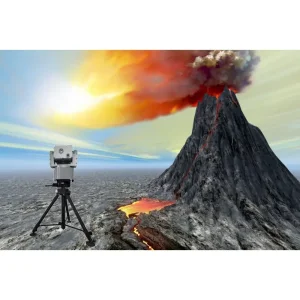
As highlighted by our Middle East MR-ACT Remote Volcanic Gas Monitoring System, we provide specialized solutions for monitoring geological activity, ensuring the safety of nearby infrastructure and populations from natural gas emissions.
As a leading Chinese manufacturer, Minnit combines rapid technological iteration with world-class manufacturing efficiency. Global procurement teams from Europe, the Middle East, and Southeast Asia choose us for several strategic reasons:
We own the core intellectual property for FTIR, PID, and electrochemical sensing, allowing for deep customization that "assembly-only" companies cannot offer.
Our integrated supply chain in China allows us to move from order to deployment in a fraction of the time required by Western competitors.
We provide "Military Grade" precision at industrial prices, making high-end gas imaging accessible for large-scale fleet deployments.
Minnit is a national high-tech enterprise focusing on the research and development and industrialized innovative application of precision gas detection instruments. The company uses technological innovation to realize on-site, automated and intelligent analysis, detection and monitoring, and is committed to becoming the world's leading manufacturer of scientific instruments.
It has mastered relatively complete gas analysis and detection technologies such as electrochemistry, PID, and spectroscopy, and developed laboratory Analysis, on-site analysis (portable, online, mobile), automated analysis and a series of technologically leading product portfolios provide global users with comprehensive and professional solutions in the fields of advanced industry, ecological environment emergency safety and other fields.
As we look toward 2025 and beyond, the role of Drone Gas Cloud Imaging will expand from simple leak detection to comprehensive environmental intelligence. For manufacturers in the Middle East and globally, the focus is shifting toward quantification—not just seeing the gas, but measuring exactly how many kilograms per hour are being released. This data is vital for carbon credit accounting and ESG (Environmental, Social, and Governance) reporting.
Our commitment at Minnit is to continue pushing the boundaries of what is possible. By integrating hyperspectral imaging with drone technology, we are enabling our customers to detect over 400 different types of gases simultaneously from a distance of several kilometers. Whether it is for military defense, industrial safety, or environmental protection, our ranking as a top-tier manufacturer is built on a foundation of reliability, expertise, and a deep understanding of our users' needs in the most challenging climates on Earth.
For global procurement officers, choosing a partner with a proven track record in the Middle East and Russia—regions with some of the most extreme operating conditions—ensures that your investment in safety technology will deliver results when they matter most. Minnit stands ready to provide the next generation of gas telemetry and imaging solutions to secure your industrial future.